
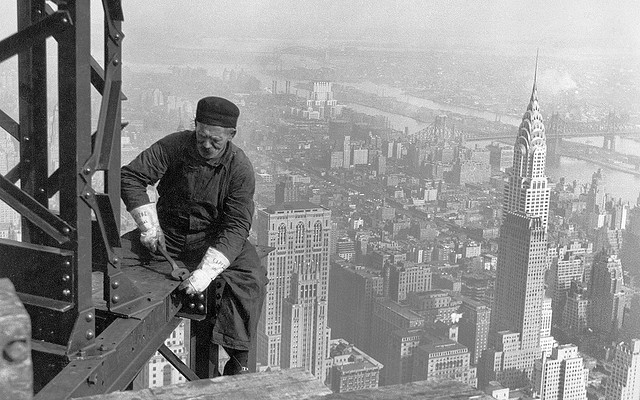
May 1 is a non-working national holiday in more than 80 countries and celebrated unofficially in many other countries. It's usually observed with speeches, rallies, and demonstrations. Ironically, although this celebration of working-class solidarity originated in the U.S labor movement in the United States and soon spread around the world, it never earned official recognition in this country. In the United States and Canada the official holiday for workers is Labor Day in September and May 1 is rarely recognized where it began.
International Workers' Day is the commemoration of what is remembered as "the 1886 Haymarket massacre" in Chicago. The police were trying to disperse a public assembly during a general strike for the eight-hour workday, when an unidentified person threw a bomb at them. The police reacted by firing on the workers, killing several demonstrators. In the late nineteenth century, the working class was in constant struggle to gain the 8-hour work day. Working conditions were severe and it was quite common to work 10 to 16 hour days in unsafe conditions.
Therefore, for workers in many countries, May 1 means remembering a long history of people fighting for the rights and dignities that are expected and enjoyed by most today.
What does International Workers Day means to you?
Years ago the common people did not have choices. And most leaders did not exercise their liberties to bring justice and fairness to the workplace either.
I like to think of International Workers Day as a symbol of hope and freedom. The freedom to choose.
As a leader, the freedom to choose means you have the obligation and opportunity to lead well. This is both a burden and a joy. Leaders today deal with rapid change and gray areas of decision-making. It was probably easier to be a leader in the highly-structured environment of union controlled factories of the 1950s, but probably less-rewarding also.
How can you optimize your freedom to choose?
Good leaders and mentors are key to effective workplaces. People at the end of the 19th century understood that for America to achieve its promise of freedom and opportunity, Americans had to be united in working hard. But they got caught up in curtailing freedoms for the workers and not-caring about working conditions.
Today leaders are more aware of the need for collaboration, continuous learning and providing working conditions that can help optimize worker's productivity and loyalty.
What choices will you make? You can choose to:
- work to continuously improve your learning performance as well as that of your people.
- strive to keep labor competitive.
- inspire a new generation of workers to contribute their best.
- reconnect your workers to the American dream.
- be fair and just in your dealings with your people
- find creative ways to improve working conditions among your workers
- nurture and develop new thinking leaders.
Over all, you can choose to listen to your people and try to understand their concerns. By finding ways to improve the quality of their lives, you will gain their loyalty and the organization will become a better place.
Remember. . .
The sacrifices of so many people can't be forgotten or people will end up having to fight for those same gains all over again. This is why May Day should be remembered by leaders. After all, leaders are workers too!
Is your workforce engaged? Do you create opportunities to listen to them? Is there something you want to improve but haven't been able to do on your own? What can you gain by putting off making changes? Nothing! You can't afford to lose more valuable time. Contact me today for a free, no obligation interview to decide how can I help you.
Photo by: Trodel