
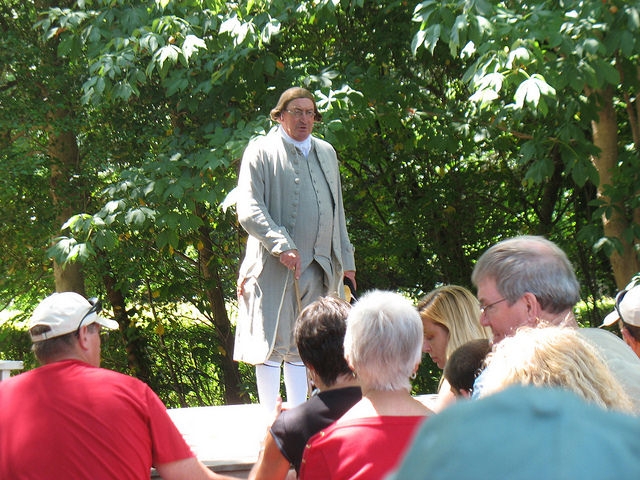
I just came back from Williamsburg, were I went for the 4th of July weekend. Williamsburg was the birth place of the American Revolution and this weekend was a good reminder of why freedom is to be treasured.
While walking around Williamsburg, I heard someone impersonating Patrick Henry, one of the leading lights of the American Revolution. He was also one of the leaders of the movement to add a Bill of Rights to the Constitution.
Patrick Henry is most remembered by the famous speech he delivered in March 1775. He spoke to his fellow Virginians at St. John's Church in Richmond, urging them to take up arms in self-defense. He ended this famous speech by the words:
“Is life so dear, or peace so sweet, as to be purchased at the price of chains and slavery? I know not what course others may take; but as for me, give me liberty or give me death!” —Patrick Henry
While listening to Patrick Henry’s words, who refused to fear powerful England and had a message of freedom, I kept thinking how much we need today leaders who are freedom-centered, not fear-based.
What is freedom centered leadership?
Freedom centered leadership is inclusive, encourages openness, self-discipline, humbleness, discipline, and selflessness. It’s ethical, promotes dialogue and collaboration and opens a space that is free of fear. All of which leads to joy, creativity, and innovation. Tony Hsieh, CEO of Zappos.com has this to say about the way his company applies freedom-centered leadership:
“Freedom-centered leadership drives the distribution of power, encourages innovation, and helps attract the best talent. It is important that any employee, from our call center to executive team, have the ability to make changes that impact how the organization operates, develops, and grows. We want to see employees at all levels make decisions without having to get a manager or supervisor involved. Running the organization with a lot of freedom offers our employees the time to collaborate and get work done but have fun doing it.”
The problem of fear-based leadership
Traci Fenton, Founder and CEO of WorldBlu, sees fear as the root of most leadership problems. She speaks about the many masks of fear, such as hierarchy, silence, cynicism, turf wars, excessive control, etc.
Fenton cites research showing that when we operate in a state of fear, the peripheries of our brains shut down and we only use about 20% of our mental capacity. In the US, one out of four Americans say they work in a dictatorship. In the U.S. a 73% disengagement in the workplace costs the economy billions annually. And the worldwide number of those who feel disengaged at work is even higher at 81%.
Fenton sees an enormous waste of human productivity, happiness, and potential. She says, “a fear-based mentality leads to fear-based design, fear-based leadership, and a fear-based culture. The alternative is a freedom-centered mindset where systems give power to the people and release potential.”
What freedom centered leaders look like
Fenton has identified three things all freedom centered leaders do well:
1. They have high self-worth. This means that the leader truly embraces who they are – foibles and all. It doesn't mean they’re arrogant or egotistical. On the contrary, they humbly value themselves and what they have to bring the world and therefore are more likely to value others’ contribution, perspective and insights as well.
2. They have a high degree of self-knowledge. Freedom-centered leaders know who they are. They understand their strengths and weakness. They know what their purpose is in life and they live it each day. They know what their talents and unique contributions are to the world and they cultivate this understanding within themselves over the course of a lifetime.
3. They are able to self-govern. A freedom-centered leader doesn’t need someone to tell them what to do because they can discover it for themselves. They are self-growers, which means they have the reasoning and critical thinking skills to know what questions to ask themselves to discover the answers they need to keep progressing forward.
Not surprisingly, all the founding fathers of the United States of America possessed these three qualities – self-worth, self-knowledge and self-governance. These are the foundation for becoming a true freedom-centered leader. They are also the foundation of freedom. Freedom-centered leadership starts with being able to lead yourself.
Remember. . .
Dictators use fear-based leadership. That isn’t the path to business or personal success – freedom-centered leadership is.
LETS TALK: I you want to be more effective with freedom-centered leadership, lets schedule a free consultation to better understand your needs and challenges. Call me directly at 1-302-399-3915 or simply email me.